
Rothko Chapel is Morton Feldman’s tribute to Mark Rothko. WYNOLD VERWEIJ spoke to Rakhi Singh of Manchester Collective, which is performing the piece in Antwerp. ‘We want to make people feel like they are in the chapel.’
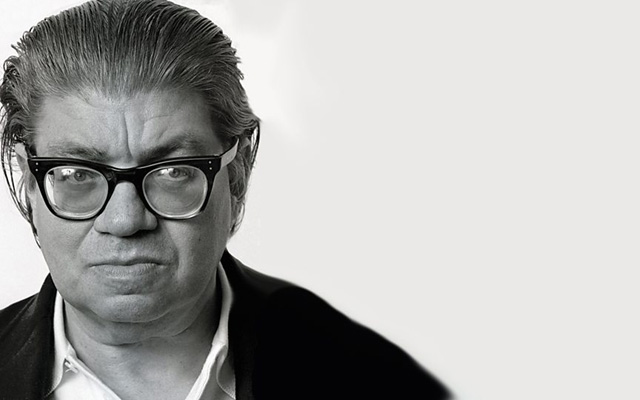
“His images go right to the edge of the canvas. I wanted to create the same effect with the music, that it reaches all eight corners of the room, so not from a certain distance”, composer Morton Feldman (1926-1987) said of his piece Rothko Chapel and its inspirer, the painter Mark Rothko. Feldman was talking about the fourteen overpowering black-purple-brown panels, some with twenty layers of paint, that Rothko (1903-1970) had created for the Rothko Chapel in Houston, Texas. He wrote the piece of the same name for violin, soprano, percussion and choir in 1971, a year after Rothko ended his life. They were friends, admired each other’s work – though Rotho once said he liked Mozart better. Rothko Chapel, which will be played by Manchester Collective at DeSingel in Antwerp on 8 May, is a musical reinterpretation of the layering of Rothkos canvases. The dark colours refer to the atmospheric tension emanating from the sky, just before a thunderstorm threatens to erupt. The blocks of colour seem to move transcendently from the here and now to a space of timelessness.
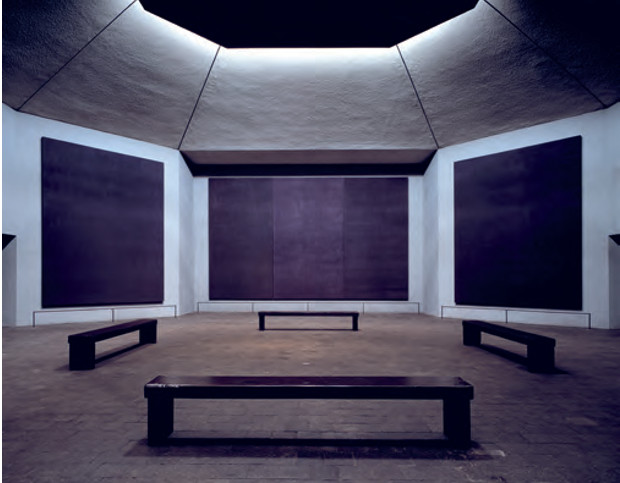

The music follows this with wandering solos on the viola, restlessness of the timpani and indefinable longings in Jewish melodies. In the middle of the piece, the choir sings so softly that dissonances can be interpreted as the rare twinkles that Rothko’s paintings reveal after long viewing. Rothko Chapel has been performed about 130 times in more than 25 countries over the last 20 years. To Rakhi Singh, violinist and artistic conscience of ManchesterCollective, I asked what her ensemble can still add. Singh: “This music is inspired by a visual artist and therefore has its own form. The chapel is a form, the chapel is the space that contains the paintings. We want to make people feel like they are in the chapel. To create that feeling, we are working with a lighting technician for this production. The idea is that the lighting helps you to completely immerse yourself in the music. The music is very elementary and it seems to me that we have all the building blocks at our disposal: the lonely solo voice of the violin, the angelic voice of the soprano, plus the choir (Sansara) that refers to the clouds and the texture. It’s about bringing the listener close to it.”
“Real purity”
Dark tones are one of the links that connect Feldman and Rothko. The heavy texture and obscure colouring in Rothko’s paintings are often associated with the deeply religious underpinnings he inherited in his native Latvia. With dark, in his words ‘quasi-Hebrew’, passages in the piece’s finale, Feldmann referred to Jewish history; he wrote the excerpt when he was 15. Rakhi Singh says he feels that Rothko Chapel breathes ‘real purity’. “The silence in the concert space is as powerful as the sounds, maybe even more than that. I love that. This is the kind of music where Manchester Collective feels comfortable.” The orchestra’s programming is free-spirited, always surprising and,says Rakhi, always composed from the heart, not ‘academically’. The musicians of Manchester Collective are known as extremely good chamber musicians who easily switch from a Haydn string quartet with score to South African music they play from memory. Singh: “We adopt an open and generous attitude, taking the craziest performances seriously. Can we sing this from the sheet? Do we walk while playing? Do we do this or do that? Well, everyone has a mindset of: Okay, yes, let’s try. That’s open-minded, that’s generous. I like very high level, for sure, but also generosity’.
What do Mark Rothko’s canvases mean to a musician?
‘I love his visual vibration. Somehow he has captured the energy of colour. And it moves.It consumes you, but it also pulls you out of yourself. I see vibration and sound as something universal. The universe literally vibrates. And we vibrate too. Somehow Rothko captured that on canvas. It doesn’t move in front of you, not behind you. It seems like it’s moving all around you. It’s music.
What does Manchester Collective want to bring about with the piece?
‘If you can feel a kind of magnetic force in the air, I have felt that there is something going on with this work. Whoever is in the audience will be there. I want to offer an atmosphere of empathy,a sense of comfort. It is difficult to describe because it feels so deep, it is a feeling of calmness and total spaciousness within yourself. But also in the space where we all exist together, so a connection. Connection with ourselves and with the other things that are bigger than ourselves.’
Manchester Collective, Sansara – Musical tribute to Mark Rothko. On May 8 at DeSingel in Antwerp, 8pm.
This article was published in ZOUT Magazine, May 2024, in Dutch (original version)
Featured image: Robin Clewley